
By July, the Central Texas heat stops being an inconvenience and starts becoming a real threat to your landscape. The lawn may look stressed, but the bigger risk is often hidden in plain sight: trees and mature shrubs that are quietly running out of moisture, losing canopy health, and slipping toward long-term decline. Deep root watering in Texas matters so much in midsummer. When the surface dries out, and sprinklers only touch the top layer of soil, roots that need steadier moisture are left exposed to heat, compaction, and evaporation. If you wait until leaves are crispy or branches are flagging, you’re already behind.
For property owners who care about long-term landscape health, July is the month to shift from surface-level watering to root-level strategy. That means reading the early signs of stress, protecting the critical root zone, and using slow, deep watering methods that help trees and shrubs withstand a brutal Texas summer. Southern Landscape has spent decades helping Austin-area properties do exactly that, and the same principles apply whether you manage a single heritage oak or an entire estate canopy.
- Why July Is the Most Dangerous Month for Texas Trees and Shrubs
- How Deep Root Watering Works When Sprinklers Fall Short
- Protecting the Critical Root Zone Before Heat Damage Spreads
- Signs You Need Strategic, Deep Root Watering
- How Southern Landscape Approaches Summer Tree Health in Austin
- Deep Root Watering: A July Action Plan That Keeps Trees Alive and Landscapes Stable
Why July Is the Most Dangerous Month for Texas Trees and Shrubs
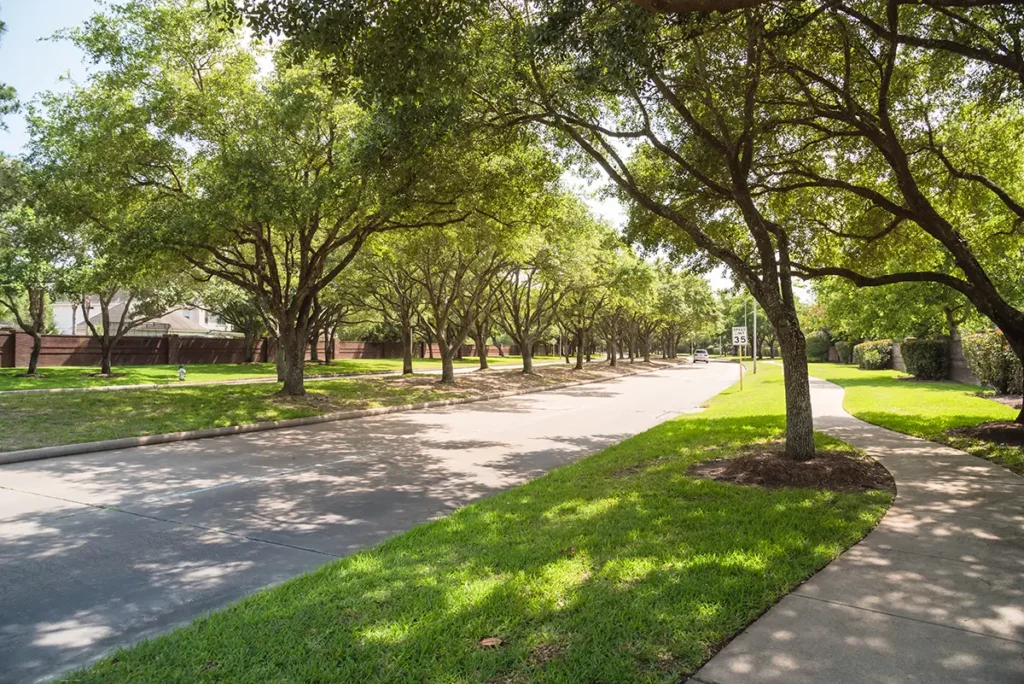
Texas landscapes don’t usually fail all at once. They decline in stages. July tends to expose that decline because the soil is hotter, rainfall is less dependable, and winds can pull moisture out faster than many homeowners expect.
Many people focus on lawns because grass reacts fast. It browns, it crisps, and it looks alarming. Trees are slower and can mislead you. They may hold green color for a while, even as their root system begins to struggle. That delay is exactly why deep root watering in Texas has to be proactive instead of reactive.
In Austin and the Hill Country, the problem is amplified by clay soil, rocky grades, and hot reflected sunlight. Water either runs off too quickly or pools in the wrong place. On sloped properties, a sprinkler cycle can look productive while doing very little for deep root hydration. That’s why a summer watering plan has to account for soil behavior, canopy size, and plant maturity instead of treating every plant the same.
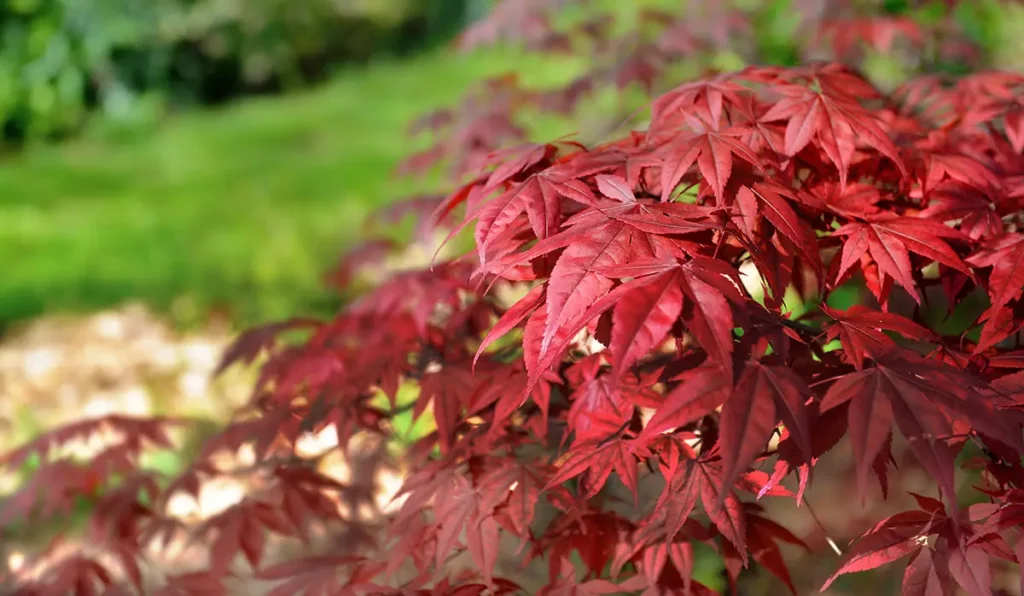
The trees most at risk in July are often the ones homeowners value most. Mature oaks, young redbuds, Japanese maples, ornamental shrubs, and recently installed landscape specimens all need a different level of attention. If they’re stressed now, the damage can carry into fall and even affect next year’s growth flush.
What Summer Stress Looks Like Before It Becomes a Crisis
The challenge is that heat stress doesn’t always look like heat stress. It can resemble disease, drought, or insect pressure, which is why a wrong diagnosis can lead to the wrong treatment.
Watch for these early warning signs:
- Leaf edges turning yellow, tan, or brown before the center of the leaf
- Leaves curling inward or drooping during the hottest part of the day
- Branch tips that stay limp instead of recovering overnight
- Premature leaf drop, especially when leaves are still partly green
- Thin, sparse canopies where the tree was full earlier in the season
- A general dullness in color that makes the canopy look less vigorous
Those are classic tree heat stress symptoms, and they often show up before the damage becomes severe. Leaf scorch is one of the most common signals. It usually begins at the margins of the leaf and works inward, especially on trees that can’t draw enough moisture to keep up with evaporation.
Some species are especially sensitive in July, which is why deep root watering before the temps reach triple digits is so important. Japanese maple, for example, can struggle hard in reflected heat and afternoon sun. Younger Texas redbuds can also show stress quickly if they don’t have enough shade or root-zone moisture. If those trees are planted in exposed spots, they may need more intentional protection than larger, established shade trees.
How Deep Root Watering Works When Sprinklers Fall Short
The biggest mistake homeowners make in summer is assuming that more frequent watering automatically means better watering. It doesn’t. Many sprinkler systems are built to serve turf, not trees. They wet the first few inches of soil and leave deeper roots dry.
That’s a problem because most established trees rely on moisture deeper in the soil profile. In Texas, especially in the Hill Country, roots are trying to survive heat, compacted soil, and fast surface evaporation at the same time. Shallow watering encourages shallow rooting, and shallow roots are much more vulnerable during a droughty July.
Deep root watering in Texas means applying water slowly enough that it sinks past the hot upper layer and reaches the active root zone. This isn’t about flooding the soil. It’s about giving moisture time to penetrate instead of evaporating on contact.
Practical Ways to Water Deeper, Not Just More Often
There are several ways to do this well at home, and each one works better than a quick spray cycle from a lawn system.
A simple hose setup can be surprisingly effective:
- Place a garden hose near the drip line, where the canopy ends
- Set it to a slow trickle, roughly the width of a pencil stream
- Let it run for 1 to 2 hours in one spot
- Move to another area around the tree and repeat as needed
For larger trees or broader root zones, a soaker hose can work well too. Spiral it through the root area and let it run slowly for several hours so the soil absorbs water gradually.
The main idea is frequency and depth, not speed. One slow, deep soak every 10 to 14 days is usually far more useful than a short daily spray that barely wets the surface. That matters even more in rocky terrain, where water can run off quickly and never reach the places roots actually use it.
This is where many homeowners ask how to save a wilting tree in July in Austin. The answer is usually not a panic watering session. It’s a consistent, slow-moisture approach that lets the tree recover without shocking the root zone.
Why the Drip Line Matters More Than the Trunk
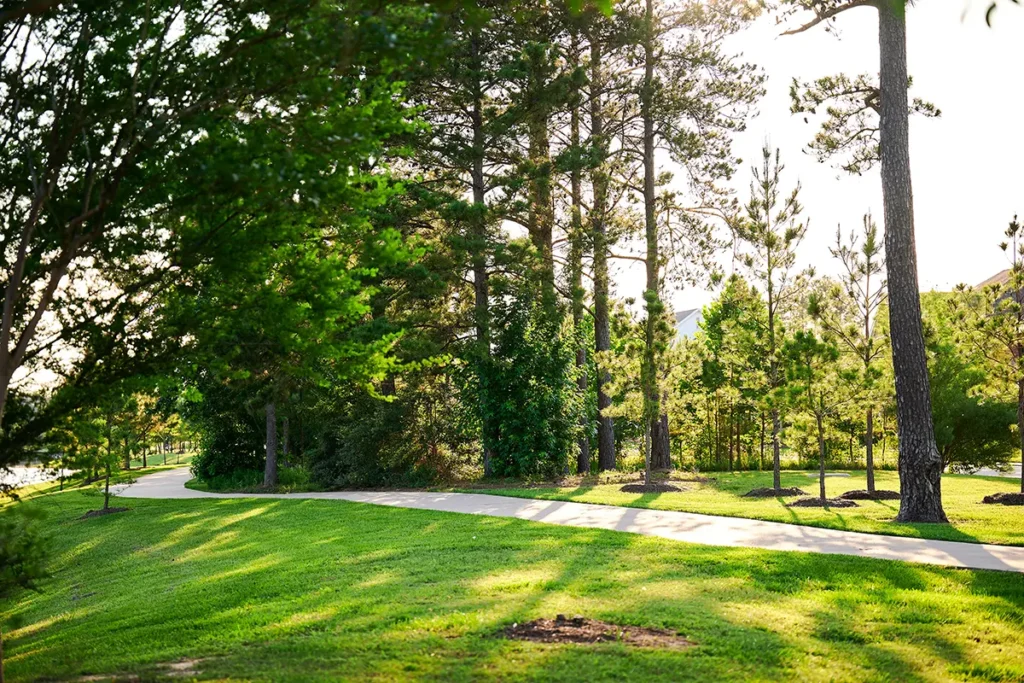
When people water a tree, they often aim close to the trunk. That seems logical, but it’s usually not where the absorbing roots are most active. The feeder roots that gather moisture are often spread much farther out, closer to the drip line, and beyond.
That’s why drip line watering is so useful. It targets the area where the tree is most likely to take up moisture, instead of concentrating water where it does the least good.
For mature trees, especially oaks, the goal is usually to water broadly rather than narrowly. If you’re thinking through the best ways to water mature oak trees in summer, the answer is almost always to cover more of the root zone, apply water slowly, and give it enough time to soak in. Mature oaks don’t want flashy irrigation. They want consistency.
Protecting the Critical Root Zone Before Heat Damage Spreads
Deep root watering is only part of the job. Even a smart irrigation plan can struggle if the soil surface is overheating or if the root area is left exposed. That’s where the critical root zone, or CRZ, comes in.
The CRZ is the area around the tree where roots are most important for moisture uptake, oxygen exchange, and overall stability. People often underestimate how wide that area is. In many cases, it extends far beyond the trunk and well into the area under the canopy.
If the CRZ bakes all day, moisture loss increases, and root function slows down. In July, that can push a tree from stressed to unstable much faster than most people expect.
Mulch, Shade, and Soil Cover Make a Bigger Difference Than You Think
A soil surface left bare in Texas heat loses moisture fast. It also gets hotter than many homeowners realize. That’s why a soil evaporation barrier matters so much in summer. Mulch is one of the best tools for that job because it reduces direct sun exposure, slows evaporation, and helps moderate soil temperature.
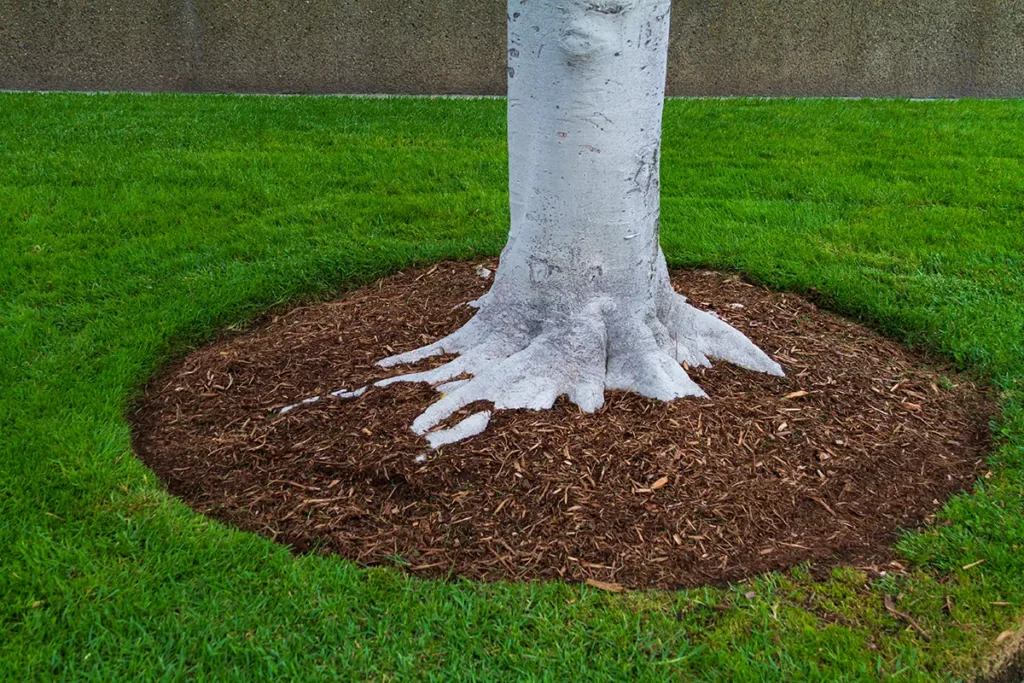
A good mulch strategy for summer should follow a few basic rules:
- Expand the mulch ring outward, ideally closer to the drip line
- Keep mulch at about 3 inches deep
- Pull mulch several inches back from the trunk
- Avoid piling mulch into a cone against bark
- Refresh compacted mulch so water can move through it
That last point matters. A mulch layer that’s too thin won’t protect enough. A layer that’s piled against the trunk can encourage rot and pest problems. The sweet spot is a broad, even ring that keeps the root area cooler without touching the bark.
For older properties, especially those with established shade trees, this kind of care supports heritage tree maintenance in a meaningful way. Healthy mature trees contribute to shade, beauty, energy performance, and property value. In many Austin neighborhoods, those trees are also part of the character of the home itself.
What to Do When the Soil Is Hot and Crusty
If the ground feels hard at the surface, don’t assume water is automatically reaching the roots. Dry, compacted soil can repel water at first or cause it to run off before it penetrates. In those cases, a slower application is even more important.
A few practical steps help:
- Water in longer cycles rather than short bursts
- Split watering into sections if the site is sloped
- Apply water in the early morning when evaporation is lower
- Avoid watering so fast that it pools or sheets off
- Combine irrigation with mulch coverage so moisture stays in place longer
This is especially relevant on Hill Country properties where limestone, slope, and shallow topsoil can make irrigation tricky. The goal is to get water into the root zone, not just onto the landscape.
Signs You Need Strategic, Deep Root Watering
Homeowners can handle a lot with careful observation and the right watering routine. But there are times when tree stress points to a larger issue, especially if multiple trees are declining or if the canopy keeps thinning despite reasonable watering.
A few situations warrant closer attention:
- Leaf scorch spreads across multiple parts of the canopy
- Branch dieback becomes more visible
- The tree drops leaves quickly after a heat wave
- Wilting returns even after deep watering
- The root area stays dry or compacted
- A tree on a slope seems to dry out far faster than nearby plants
When those issues show up, the question is no longer just about watering frequency. It becomes about soil condition, root access, irrigation coverage, and whether the tree is getting the kind of support it actually needs.
That’s where services like deep root watering and fertilization contractors near me enter the conversation for many property owners, although the exact solution should always match the site and the tree’s condition. In some landscapes, root-zone care is part of a broader maintenance plan rather than a one-time fix. For others, irrigation adjustments and canopy management may solve more than fertilizer ever could.
It also helps to remember that not every problem on a tree is caused by a pest or disease. July heat can imitate both. Applying a fungicide to a stressed tree with a moisture problem won’t help much. Diagnosing the issue correctly is the first step toward saving time, money, and plant material.
How Southern Landscape Approaches Summer Tree Health in Austin
For properties that depend on mature shade trees and carefully maintained shrubs, summer care can’t be improvised. It takes local experience, an understanding of soil behavior, and the ability to connect irrigation design with long-term landscape health.
That’s one reason Southern Landscape is a strong fit for homeowners who want more than basic watering advice. Since 1982, Southern Landscape has served Austin and the Texas Hill Country with landscape design-build, irrigation, and property care services that are shaped by local conditions. Their in-house team includes professional irrigators and maintenance specialists who understand how to support demanding landscapes through the hottest months of the year.
Our approach matters because mature trees don’t just need water. They need the right water, placed in the right zone, at the right pace, with attention to the full site. In a landscape with established trees, shrubs, hardscape, and slopes, a one-size-fits-all irrigation cycle usually isn’t enough.
Why Local Expertise Matters So Much in the Hill Country
Central Texas landscapes behave differently from landscapes in wetter parts of the country. Heat arrives earlier, lasts longer, and works together with rocky soil and evaporation to stress roots from multiple angles. A system that looks fine on paper may still underperform if it doesn’t match the soil and the site.
That’s why mature oak care, shrub health, and July irrigation planning need a regional lens. Southern Landscape’s long history in Austin and nearby communities means we’re working with familiar soil challenges, canopy expectations, and maintenance realities instead of guessing at them.
We serve Austin, Westlake, Rollingwood, Bee Cave, Lakeway, Cedar Park, Leander, Round Rock, Georgetown, Dripping Springs, and Wimberley, so their service footprint reflects the kind of conditions where summer tree stress is a recurring issue rather than a rare event.
Deep Root Watering: A July Action Plan That Keeps Trees Alive and Landscapes Stable
The best Austin tree care plan is simple in concept but disciplined in practice. It starts with observation, followed by smarter, deep root watering, and adds soil protection so heat doesn’t win the battle at the root level.
Here’s a practical framework you can use right away:
- Check canopy edges for leaf scorch and flagging
- Compare stressed trees to their placement in sun and shade
- Water slowly near the drip line instead of blasting the trunk
- Focus on deep, infrequent soakings rather than daily sprinkles
- Extend mulch coverage over more of the root zone
- Keep mulch off the trunk while maintaining a 3-inch layer
- Watch slopes and rocky areas for runoff
- Reassess trees weekly during heat waves, not just monthly
If you follow that pattern, you’re doing more than trying to keep a landscape alive. You’re protecting structure, shade, and long-term property value. In many cases, the trees are the most important living assets on the site.
It’s also worth noting that a lawn can often recover from dormancy. A stressed root system may not recover so easily. That’s why the smartest summer strategy starts below the surface. If roots stay healthy, canopies are far more likely to hold on through August and into fall.
For property owners who want a more advanced approach, Southern Landscape can help align irrigation, maintenance, and tree-focused care with the realities of Austin heat. That’s especially valuable for estates, heritage trees, and landscapes where loss isn’t just cosmetic but expensive.
By July, the goal isn’t to chase every brown leaf. It’s to protect the root system that keeps the whole tree functioning. When you focus on deep root watering, CRZ protection, and early stress detection, you give trees and mature shrubs a real chance to hold their place through the hardest part of summer. And for Texas properties where canopy health matters, that kind of care is worth making a priority.