
- The Austin Soil Challenge: Why Your Yard Won’t Drain
- Functional Beauty with Dry Creek Beds for Landscape Drainage
- Engineered Solutions: When You Need Landscape Drainage Heavy Lifters
- Retaining Walls and Soil Stabilization for Landscape Drainage
- Landscape Drainage Solutions – The Southern Landscape Advantage
- Protect Your Investment Today
You’ve spent thousands of dollars on your lawn, curated the perfect flower beds, and invested in a lush outdoor living space. But then, a classic Central Texas downpour arrives. Within thirty minutes, your backyard is transformed into a muddy pond, and your expensive mulch is washing right down the street into the storm drain. In the Austin area, this isn’t just an inconvenience—it’s a threat to your property. Because of our region’s unique geology, professional landscape drainage is the invisible foundation of a successful yard. Without a plan to manage the flashy nature of our weather, even the most beautiful garden can become a liability.
This recurring cycle of saturation and erosion does more than just ruin your curb appeal; it compromises the structural integrity of your outdoor investments. Left unchecked, standing water exerts hydrostatic pressure against walls and seeps into crawl spaces, leading to costly long-term damage that standard homeowners insurance rarely covers fully.
By implementing professional landscape drainage Austin homeowners can rely on—ranging from aesthetic dry creek beds to engineered French drains—you can protect your home’s foundation and create a landscape that handles our unpredictable weather with ease. This guide explores why Austin yards struggle with water and how you can transform a runoff nightmare into a functional, beautiful landscape feature.
The Austin Soil Challenge: Why Your Yard Won’t Drain
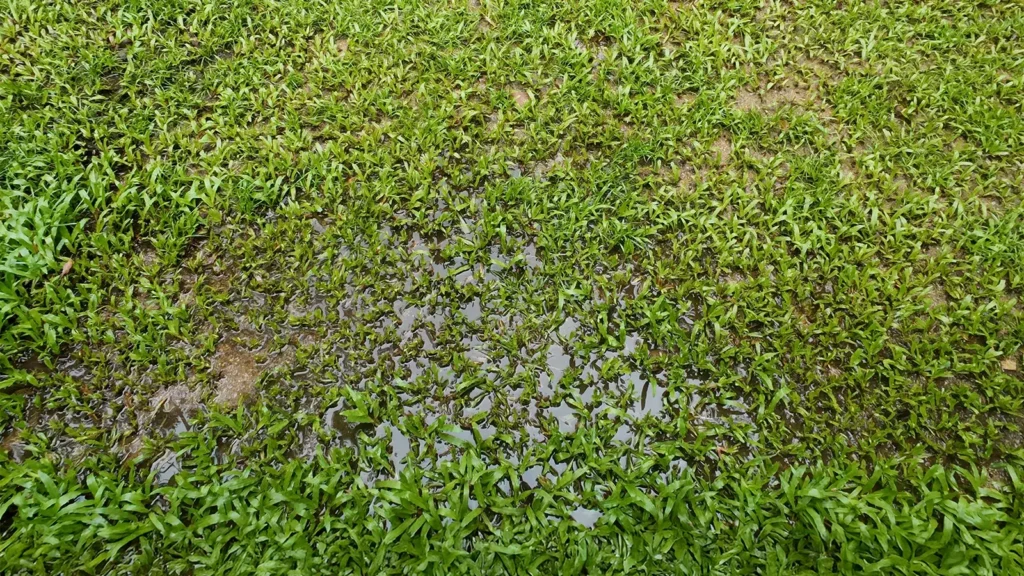
Austin sits on a unique geological divide that makes landscape drainage and water management particularly difficult. To the East, you have the heavy, gumbo clay of the Blackland Prairie. This soil is famous for its high expansion and contraction rates; when it’s dry, it cracks, and when it’s wet, it becomes an impermeable mass that refuses to let water soak in. To the West, the rocky limestone terrain of the Edwards Plateau offers very little topsoil, meaning water hits the rock and immediately begins to sheet flow across the surface. This creates a slip-and-slide effect where gravity takes over, sending sheets of water directly toward your home’s lowest points.
Understanding this geological split is vital because the solution for a home in Pflugerville (clay-heavy) will look very different from a solution in Bee Cave (rock-heavy). In the clay zones, the soil acts like a sponge that has already reached its limit, holding moisture against your foundation for weeks. In the rocky zones, the sheer velocity of the water can strip away years of landscaping in a single afternoon. Without intervention, these natural conditions work against your property, turning every storm into a potential restoration project rather than a refreshing soak for your plants.
Identifying Pooling Areas
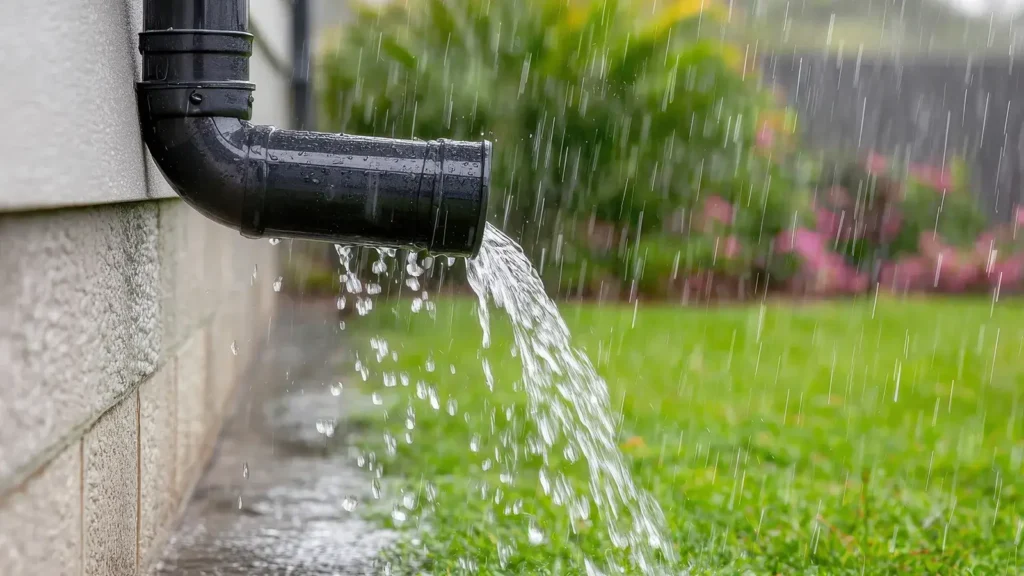
Before you can implement erosion control Austin TX services, you must identify your yard’s problem spots. After a rain, look for:
- Spongy Turf: Areas that remain squishy days after the rain has stopped.
- Exposed Roots: Signs that topsoil has washed away, leaving tree roots vulnerable.
- Foundation Cracks: Siding or brickwork that shows signs of shifting due to soil saturation.
The Risks of Standing Water
The flashy nature of Austin rain—where we often receive several inches of water in just a few hours—overwhelms standard suburban lot grading. When water sits, it creates a cascade of problems:
- Mosquito Breeding: It only takes an inch of standing water for mosquitoes to thrive.
- Root Rot: Even drought-tolerant native oaks can die if their root systems are submerged for too long.
- Foundation Shifting: Excess water near the home causes the clay soil to swell, putting immense pressure on your foundation.
Proper grading and leveling are often the first step in ensuring that water moves away from the structure. But in many Austin neighborhoods like Westlake or Circle C, the sloping land requires more creative intervention.
Functional Beauty with Dry Creek Beds for Landscape Drainage
Drainage doesn’t have to be hidden inside a plastic pipe. In fact, many homeowners are searching for dry creek bed installation Austin services because they want a solution that adds a rugged Hill Country aesthetic to their property while performing a vital task. These features serve as an architectural bridge between the wild Texas landscape and your manicured home environment. By mimicking the natural limestone arroyos found throughout the Balcones Escarpment, we create a system that looks like it has been part of the property for decades, rather than an afterthought installed to fix a problem.
The Anatomy of a Dry Creek Bed
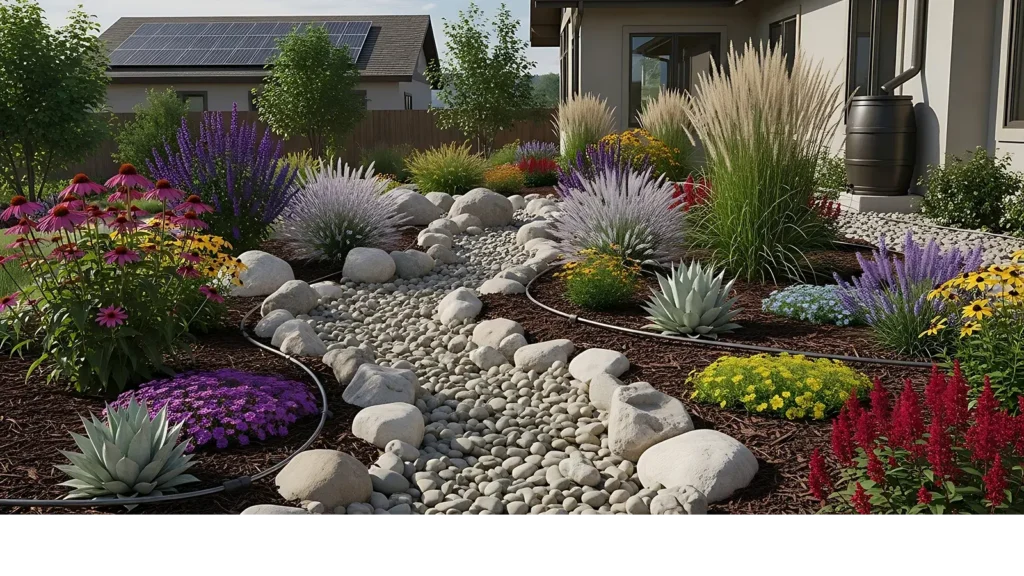
A dry creek bed acts as a designated highway for runoff. To make it look natural rather than manufactured, we use a technique called layering. This involves:
- Variable Stone Sizes: We mix small river rocks with mid-sized cobble and anchor the bends with large limestone boulders.
- Curvature: Natural creeks don’t run in straight lines. We design them to meander through the landscape, mimicking the local topography.
Beyond mere aesthetics, the structural composition of these beds is engineered to break the water’s velocity. By placing larger boulders at key bends in the creek, we prevent the water from jumping the banks during a heavy surge. This strategic placement ensures that the energy of the runoff is dissipated safely, protecting your surrounding topsoil and preventing the bed itself from being washed away during the 500-year flood events that Austin is increasingly prone to experiencing.
Incorporating Native Plants
To further assist with runoff management, we incorporate moisture-loving native plants along the edges of the creek bed. Species like Inland Sea Oats or various Sedges are excellent choices. These plants have deep root systems that help drink the runoff and stabilize the soil, preventing further erosion. These botanical additions also act as natural filters, trapping sediment and pollutants before the water reaches our local aquifers.
Material Selection
To suit the established architectural styles of Central Texas, we suggest using local materials. Texas River Rock or Oklahoma Flagstone provides a timeless look that feels like it has always been a part of the landscape. Using local stone isn’t just about looks—it’s about durability. Texas limestone and river rock are chemically compatible with our soil and climate, meaning they won’t degrade or discolor as quickly as imported materials might. The goal is to ensure the path leads water to a safe exit point—typically a street or a storm easement—rather than toward your neighbor’s fence or your own back porch.
Engineered Solutions: When You Need Landscape Drainage Heavy Lifters
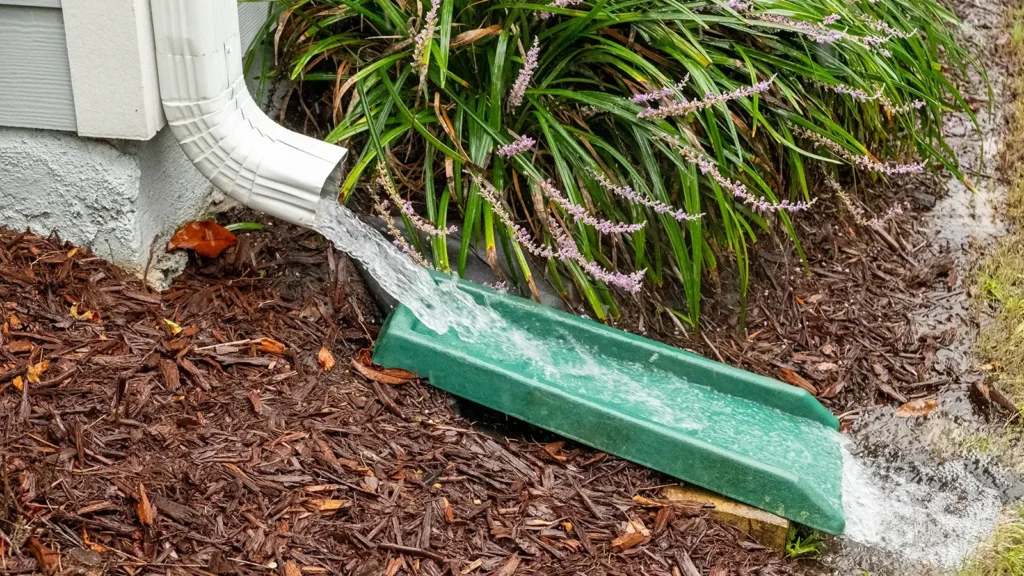
Sometimes, the volume of landscape drainage is too great for surface solutions alone. For homes with significant elevation changes or water trapped against a foundation, we move the water underground. If you’ve been searching for “French drain contractors near me,” you likely have a subsurface water issue that requires an engineered approach. These high-capacity systems are the workhorses of residential water management, utilizing gravity and advanced materials to redirect thousands of gallons of water away from vulnerable zones before it has a chance to pool or seep. In Austin’s tight suburban lots, these heavy lifters provide the surgical precision needed to manage water without requiring massive regrading of the entire property.
French Drains vs. Catch Basins
- French Drains: These are ideal for subsurface water saturation. They consist of a perforated pipe buried in a trench filled with gravel and wrapped in filter fabric. They are designed to wick water out of the soil, making them the gold standard for foundation protection and preventing water from seeping into crawl spaces or basements.
- Catch Basins: These are the grates you see at the surface, usually located at the lowest point of a lawn or at the end of a driveway. They are designed to move large volumes of surface water quickly during peak storm intensity. If you are wondering how to fix standing water in backyard Austin environments, a combination of these two—subsurface wicking and rapid surface collection—is often the answer.
By integrating these components, we create a multi-tiered defense. The catch basins handle the immediate deluge of a thunderstorm, while the French drains work quietly for hours afterward to dry out the soil profile. This ensures your yard isn’t just free of puddles, but also free of the deep-seated moisture that leads to unstable soil conditions and long-term foundation heaving.
Maintenance and Compliance
One often-overlooked aspect of landscape drainage is maintenance. We install clean-out ports in all our underground systems. Over time, Austin’s fine silt and debris can build up inside pipes; clean-out ports allow you to flush the system and ensure long-term function. Furthermore, we ensure all discharge follows City of Austin Drainage Criteria, moving water toward the street or designated easements to avoid legal disputes with neighbors and ensure your home remains compliant with local environmental regulations.
Retaining Walls and Soil Stabilization for Landscape Drainage
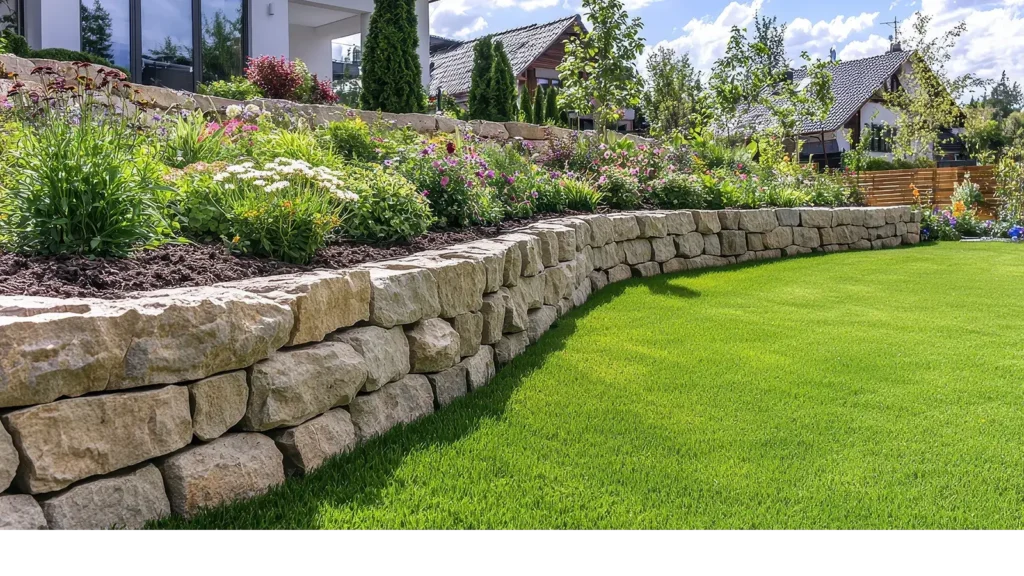
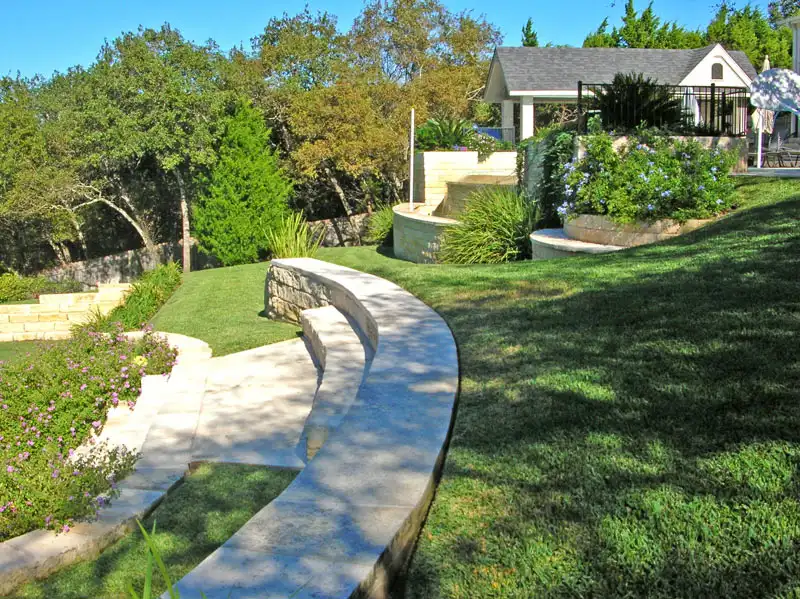
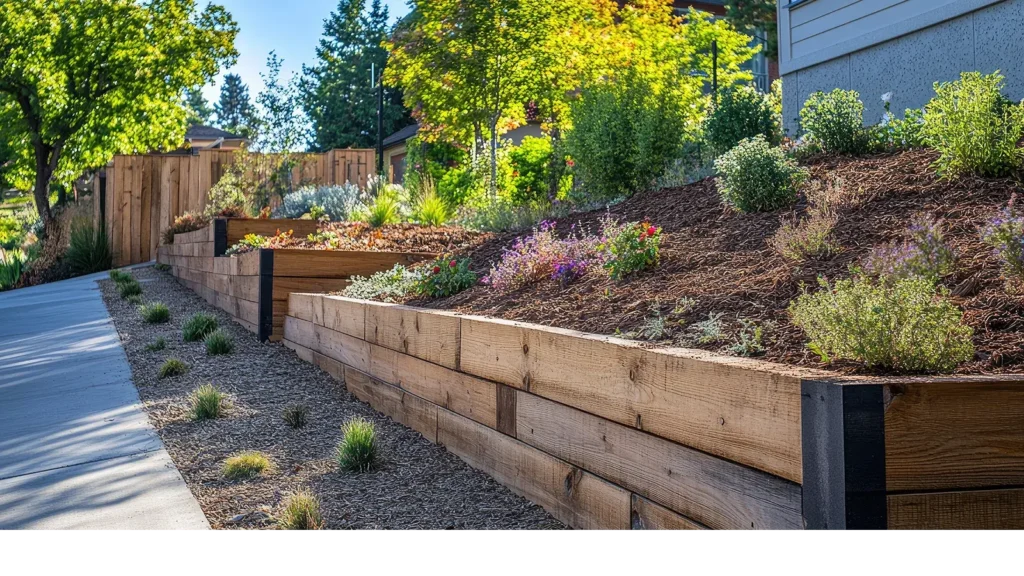
In the Austin Hill Country, drainage and elevation go hand-in-hand. Often, the best way to manage water is to build retaining walls. These structures allow us to terrace a sloped yard, creating flat shelves where water can be absorbed or directed more effectively. By breaking up a steep slope, we reduce the velocity of the water, preventing it from gaining the destructive momentum that leads to deep gully erosion.
When combined with native groundcovers, retaining walls provide a permanent solution to erosion control Austin TX homeowners need. Slowing the water down gives the soil time to absorb what it can, while the wall’s built-in weep holes and gravel backfill allow excess moisture to escape without building up hydrostatic pressure behind the stones. This is critical in Austin’s clay-rich environments, where trapped water can exert enough force to topple a poorly designed wall. We also integrate perforated drainage pipes behind the wall’s base to channel water toward a safe discharge point. This dual-purpose approach not only stabilizes your land but transforms unusable hillsides into functional tiers for gardens or seating areas, effectively increasing your usable square footage.
For more information on the structural requirements of these features, you can consult the Interlocking Concrete Pavement Institute for best practices on segmental retaining walls.
Landscape Drainage Solutions – The Southern Landscape Advantage
At Southern Landscape, we believe landscape drainage is as much about civil engineering as it is about gardening. We don’t just hide the problem; we turn a drainage necessity into a landscape feature that adds value to your home. Our team approaches every project with a big picture perspective, ensuring that solving a puddle in the backyard doesn’t accidentally create a swamp on your patio. We understand that your outdoor space is an ecosystem, and our solutions are designed to support that system’s health while providing a robust defense against the unpredictable Central Texas climate.
Landscape Drainage: Our Custom Process
- Site Elevation Survey: We use precision tools to find the exact low points of your property. This data-driven approach removes the guesswork, allowing us to map out the natural hydraulic flow of your land.
- Custom Design: We create a plan that integrates seamlessly with your existing trees, patios, and aesthetic goals. Whether you need a contemporary concrete channel or a rustic stone creek, the design will complement your home’s architecture.
- Professional Execution: From trenching to stone-setting, our team ensures the system is built to last for decades. We use commercial-grade liners, schedule-40 piping, and reinforced aggregates to ensure that once we fix your drainage, it stays fixed.
Managing water is the key to a sustainable, healthy Austin yard. Whether we are installing native groundcovers to hold soil in place or complex underground piping, our goal is your peace of mind. By merging technical expertise with a passion for beautiful outdoor living, we ensure that your property can withstand the elements while remaining the envy of the neighborhood. For those looking for a deeper dive into sustainable land management, the Lady Bird Johnson Wildflower Center offers incredible resources on how native plants can assist in large-scale water management.
Protect Your Investment Today
Proper drainage is the most important investment you can make in your property. Without it, the “flash flood” weather of Central Texas will eventually take its toll on your plants, your soil, and your home’s foundation. By choosing a comprehensive approach—incorporating grading and leveling, beautiful dry creek beds, and high-capacity French drains—you can enjoy your outdoor space no matter what the forecast says.
A well-executed drainage plan is the ultimate form of home insurance. It preserves your topsoil, protects your hardscaping, and ensures that your backyard remains a sanctuary rather than a hazard. In the Austin area, where the terrain is as challenging as the weather is extreme, you need a partner who understands the local dirt.
Don’t wait for the next big storm to see where the water goes. Contact Southern Landscape today for a professional drainage assessment. Let us help you turn your runoff problems into a beautiful, functional asset for your home.